
On Mugwort
Musings on a plant returned to.

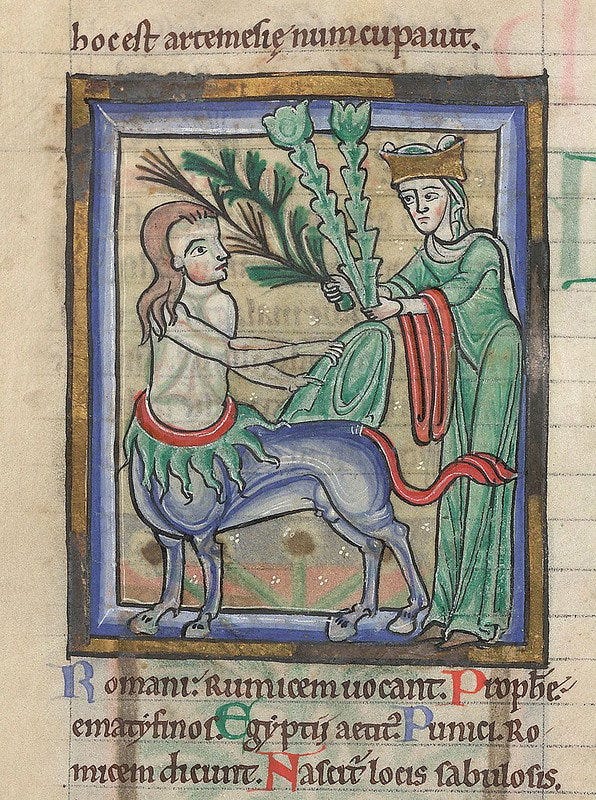
Eldest of worts
Thou hast might for three
And against thirty
For venom availest
For flying vile things,
Mighty against loathed ones
That through the land rove.

– Opening lines of ‘The Nine Herbs Charm’ (Old English, c. 10th century) referring to mugwort
1. Encounter
This week, in a city where I do not have my usual routes, I started noticing mugwort again.
It appeared first in an unkempt urban croft, growing in dense clumps at the edge of a path that felt only partly maintained. Then, on the walk to a job interview, I saw it again, pushing up between kerb and road in heavy bunches, almost too full for the space it occupied.
The buds are large just now. Unusually full for early summer, as if the plant is holding more of itself than it needs to.
I picked some and carried it with me afterwards, turning the stems in my hands, smelling them intermittently on the way home.
2. Familiar practice
When I find mugwort, I usually take some with me.
Not in any systematic way, and not always for the same reason. It is more like a habit that sits slightly outside explanation. I recognise it quickly, and if there is enough of it, I will break a few stems away and carry them for a while.
I turn the leaves between my fingers as I walk. The smell is sharp, slightly bitter, and it lingers longer than expected.
Sometimes I bring it home and hang it above my bed, stuff it into my pillows or dry it out for tea. I do not think of this as a practice while I am doing it. It happens in the same way I might leave keys in a certain place or open a window without deciding.
It is only later that it becomes noticeable as a pattern.
3. Where it grows
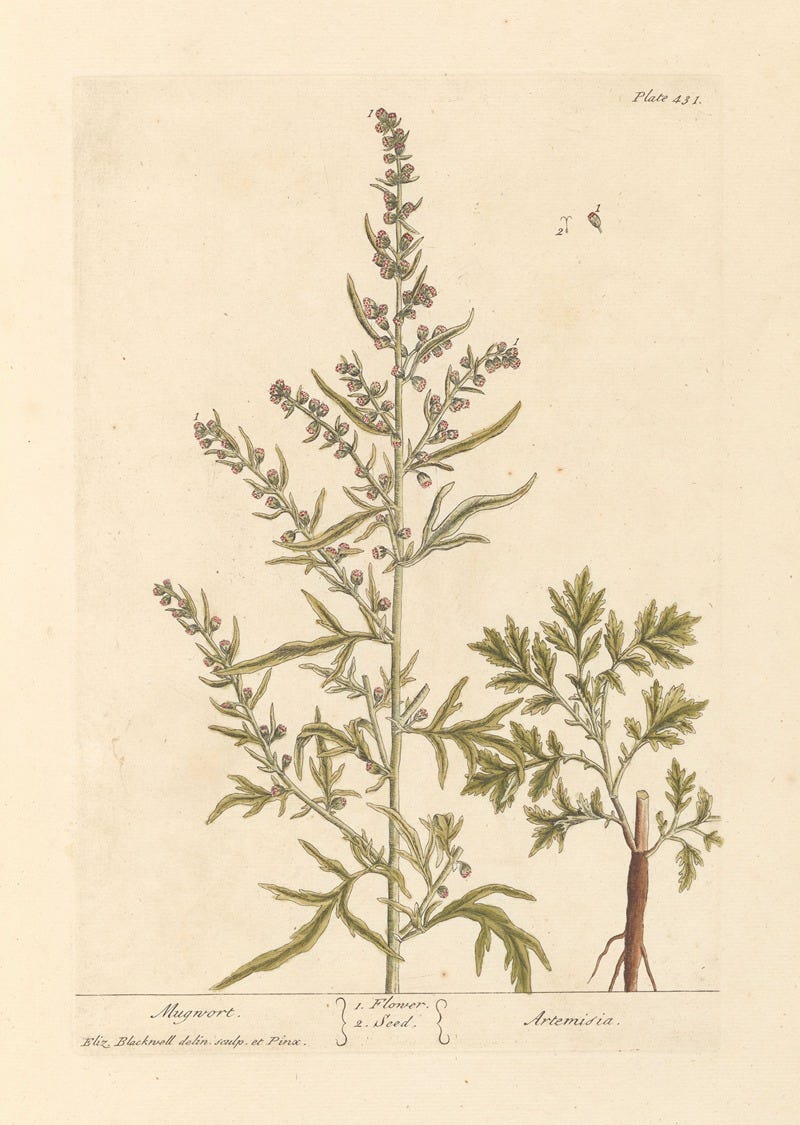
Mugwort does not appear randomly, but it also does not behave like a cultivated plant.
In cities, it tends to establish itself in ground that has been altered but not resolved – places that have been cut into, built over, abandoned or left in partial use. The soil is not untouched, but it is also not maintained.
What I notice is not just where it grows, but the kind of attention those places receive. They are seen but not tended, passed through but not completed. Mugwort seems to follow that condition rather than any specific location.
It does not need stable ground so much as ground that has stopped being negotiated.
4. What gathers around it
Across different places and periods, mugwort has been called the mother of herbs and has gathered associations rather than a single fixed meaning.
It has been used as a plant carried by travellers or placed on the body or in bags for protection on journeys. In some traditions, it is burned or hung in spaces as a way of shifting what is considered unseen or unsettled. In others, it is placed near sleep, where it is said to influence dreaming.
They sit alongside one another without resolving into agreement. The same plant appears in accounts of protection, movement, vision and sleep, without any single version fully taking precedence.
What persists is not consistency, but repetition: the way different contexts return to the same plant and attach different functions to it.
5. Sleep and attention
At night, mugwort is sometimes placed under pillows.
It is said to bring vivid dreams or to sharpen the boundary between waking and sleep. In contemporary herbal practice, it is often described as a plant that supports lucid dreaming, though this language feels more recent than the ways it has been used historically.
There is an effect, though not the one most often described. Dreams become more visually vivid – not lucid, not directed, but sharper in their images and more present on waking.
They do not feel clearly caused by anything. But there is sometimes a sense of continuity between the waking world and that of sleep – as if the boundary between those states is less fixed than it usually seems.
Whether mugwort alters dreams or simply makes them more noticeable is not something I can separate.

6. What it has become
In recent years mugwort has reappeared in different forms.
It circulates through herbal shops, online spaces and wellness language as a plant associated with dreaming and altered sleep. It is often presented in terms of use – something to be taken, brewed or placed with a particular outcome in mind.
In this framing, the plant is separated from the conditions in which it grows. It becomes more tightly defined by function, while its presence in disturbed or marginal ground remains unchanged and largely unremarked.
The older associations do not disappear, but they sit alongside this newer language without fully merging with it.
The plant itself remains visually the same. What changes is the way it is described and the kinds of attention it is given.
7. Return
Sometimes I still pick it up. Sometimes I do not.
The decision feels less important than the recognition itself.
It does not seem to depend on being noticed in order to persist.
8. Closing
It grows where things have been cut into and left open.
It returns to those spaces without needing to resolve them.